
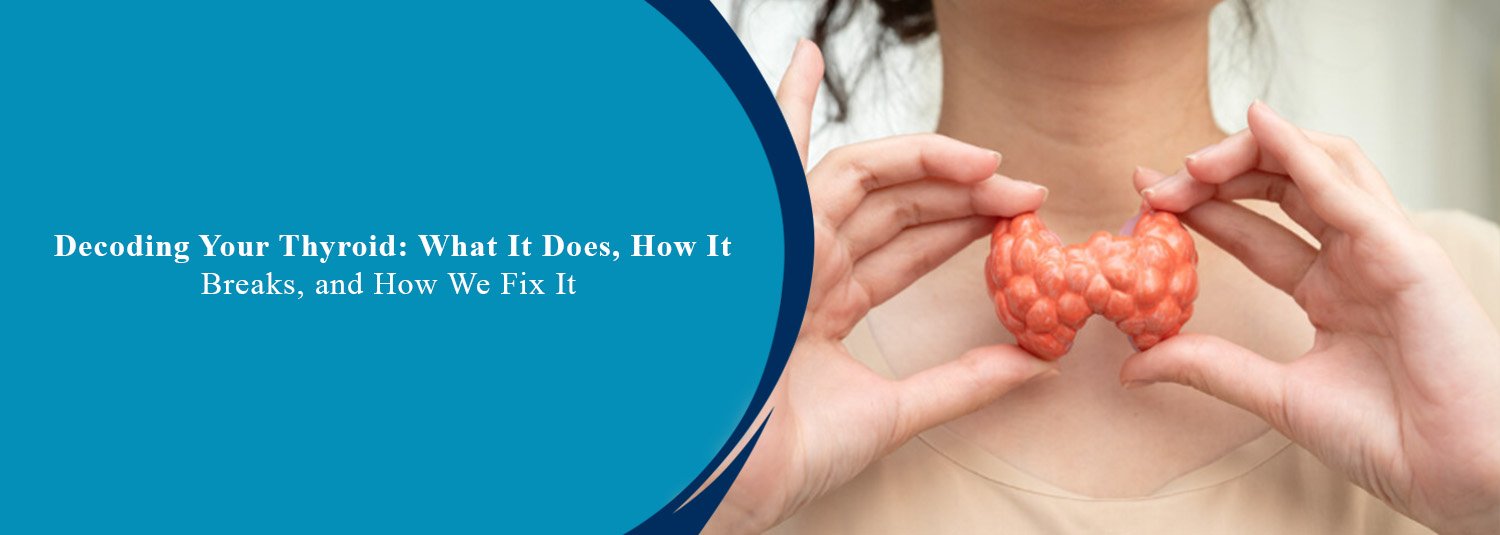
The thyroid gland is a small, butterfly-shaped gland located at the front of the neck. This area has special importance in the functioning of the body, even though it is rather small. It produces hormones that affect the body's metabolism, energy use, heat regulation, heart rate, digestion, and other functions.
An abnormally functioning thyroid has negative impacts on multiple systems of the body. Some thyroid problems result in an underactive thyroid; others result in an overactive thyroid. There are other conditions, namely thyroid swelling, thyroid nodules, and certain immunological diseases, that can influence thyroid health as well.
Fortunately, thyroid disorders can be diagnosed and treated. At Molecular Diagnostics and Therapy, patients can consult, be evaluated, undergo thyroid scans, & have nuclear medicine therapy under the guidance of Dr. Nikunj Jain, with the patient's entire thyroid care handled under one roof.
What Does the Thyroid Do?
The thyroid produces hormones that are essential for metabolism, like T3 and T4. These are hormones that are responsible for controlling energy usage and the speed of bodily activities. The thyroid regulates metabolism, influences heart rate, regulates body temperature, affects digestion, and influences muscle function and energy levels. It is regulated by thyroid-stimulating hormone (TSH), a hormone produced by the pituitary gland. With normal thyroid function, thyroid hormone levels are maintained within an appropriate range. When the thyroid gland doesn't make enough or too much hormone, however, symptoms and health issues may arise.
When the Thyroid Becomes Underactive
When the thyroid doesn't function as quickly as it should, it's called hypothyroidism. There are certain functions the thyroid has to be functioning to carry out properly, and these functions are slowed down by an underactive thyroid. Tiredness, weight gain, feeling cold frequently, dry skin, constipation, slow heart rate, weakness, and poor concentration are common symptoms. Others may experience mood swings as well.
A common cause of hypothyroidism is an autoimmune thyroid disorder, specifically Hashimoto's disease. Other factors can also contribute to low levels of thyroid hormone. The levels of TSH and thyroid hormones are usually measured via a blood test. Treatment may include thyroid hormone replacement and a doctor's recommendation, depending on patients' clinical conditions.
When the Thyroid Becomes Overactive
Hyperthyroidism is when the thyroid is overactive; excess thyroid hormone is responsible for it. This can cause several processes in the body to occur at an accelerated rate. Common symptoms include weight loss, rapid pulse, increased sweating, heat intolerance, nervousness, hand tremors, insomnia, and diarrhea.
Thyroid Swelling and Goitre
The thyroid gland may also increase in size or become swollen, which is called a “goitre”. A goitre can occur when thyroid function is underactive, overactive, or normal. Thyroid enlargement may also be caused by other changes.
In some individuals, swelling can be observed at the front of the neck. In some people, symptoms can include difficulty breathing or swallowing due to a large thyroid. Blood tests and imaging might be performed to assess thyroid function, enlargement, and/or nodules to see if additional tests are necessary.
How Do Doctors Find Out What Is Wrong With the Thyroid?
Typically, a medical evaluation is the first step in diagnosing thyroid conditions. The doctor may ask you about complaints of tiredness, weight loss, palpitations that you notice, sweating, changes in bowel movements, or problems with your neck getting thicker. Medical and family history is also important. A physical exam may help determine if the thyroid is enlarged or if there is visible swelling in the neck.
An additional blood test is ordered to check the levels of TSH and thyroid hormones. Depending on the patient's condition, imaging may also be required. An ultrasound gives information on the structure of the thyroid, and a thyroid scan can provide information on thyroid function. Dr. Nikunj Jain at Molecular Diagnostics and Therapy helps patients follow the entire evaluation process, starting with consultation and understanding their symptoms, suggesting thyroid tests and therapies.
Conclusion
Despite its small size, the thyroid affects your body's function greatly. It affects energy, metabolism, heart rate, temperature, digestion, and many other important functions. A lack or excess of hormones, swelling, and nodules can lead to various symptoms. Getting the right diagnosis is crucial, as each type of thyroid dysfunction has a different way to be managed.
Blood tests, ultrasound, and thyroid scans can provide information about thyroid function and structure. Medications, monitoring, or occasionally nuclear medicine therapy or other treatments are used. From consultation, evaluation, thyroid scanning, to thyroid therapy, Dr. Nikunj Jain offers end-to-end thyroid care at Molecular Diagnostics and Therapy.