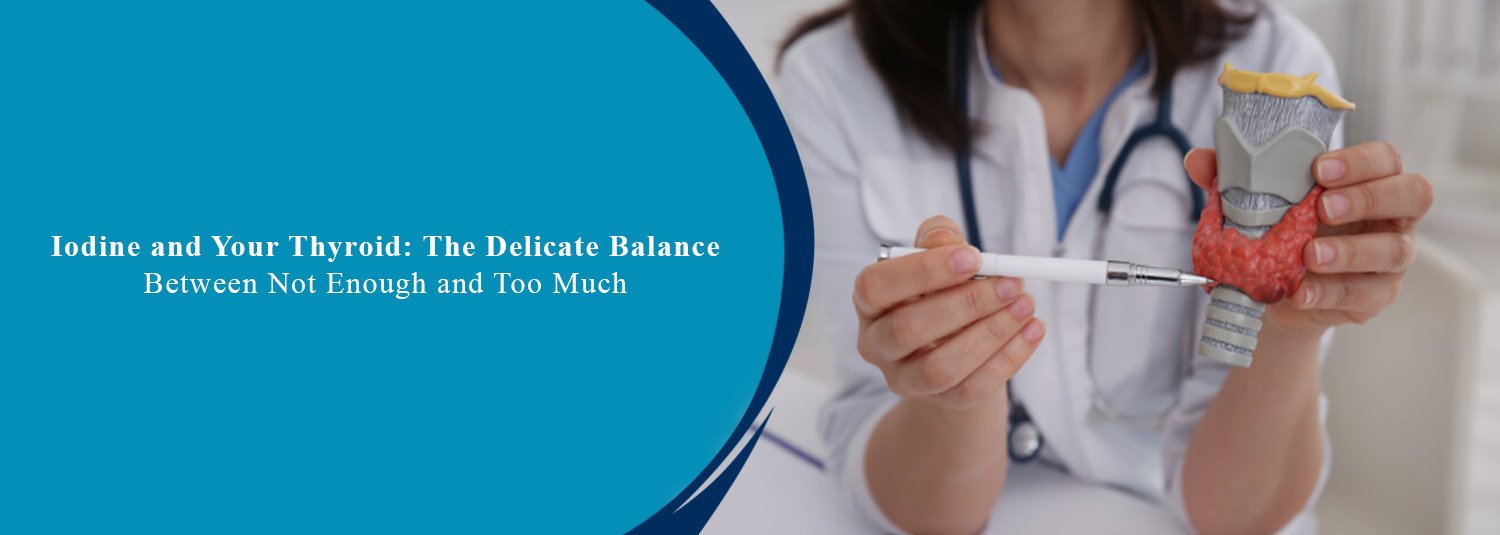
Though the thyroid is a small, butterfly-shaped gland, the thyroid plays a substantial role in the appropriate working of the body in the neck area. It manufactures hormones, which control these processes and energy, temperature, heart rate, development, and much more. Iodine is needed by the thyroid to make these hormones. Although iodine is an essential factor of thyroid function, too much of a good thing is not good.
The thyroid requires the proper amount of iodine to do its work. Too little iodine consumption can affect the production of thyroxine, while too much consumption of iodine may hinder thyroid function in some individuals. For individuals who are already suffering from thyroid issues and those who are thinking about taking iodine supplements, this equilibrium becomes even more crucial.
Dr Nikunj Jain is a consultant at Molecular Diagnostics and Therapy for the diagnostic evaluation of thyroid, nuclear medicine evaluation, and suitable management of thyroid treatment. In this method, one should show the patient empathy and then look for the available drug therapy and/or investigation that would be helpful to the patient.
Why Does the Thyroid Need Iodine?
Iodine is an essential component of the thyroid hormones thyroxine (T4) and triiodothyronine (T3). These hormones are involved in the utilization of energy and in various processes of the body. The body doesn't manufacture any iodine; it can only get it from food. Iodised salt, seafood, fish, dairy, and eggs are sources of iodine. Most adults need about 150 micrograms a day. Pregnant women need about 220 micrograms per day, while breastfeeding women need about 290 micrograms per day.
Iodine supplements aren't necessarily a good idea, as having enough iodine is essential. The recommended daily dose of iodine is quite small and, for most people, is provided by a well-balanced diet. Ingestion of extra iodine that you don't need can be detrimental on occasion.
What Happens When There Is Not Enough Iodine?
If the body is not supplied with enough iodine for a long period of time, the thyroid is unable to produce enough thyroid hormones. As a result, the thyroid gland strives to function harder and enlarge in order to compensate. If the thyroid becomes larger, it is referred to as a goitre. In severe cases of too little iodine, the thyroid produces less thyroid hormone, particularly in pregnant women and in children. Thyroid hormone is important for normal growth and brain development, especially for the young child, so it is important to have adequate iodine during childhood.
However, there are other causes of having a thyroid problem that are not iodine deficiency. There are other thyroid-related disorders (such as autoimmune thyroid disease) and some medications, as well as other health problems that may affect the thyroid as well. However, iodine supplements for a thyroid condition are not recommended if the cause of it hasn't been identified.
Can Too Much Iodine Affect the Thyroid?
Yes, Iodine is essential for the production of thyroid hormones, but it may also affect the thyroid activity of certain people. In the short term, taking too much iodine can result in an underproduction of thyroxine in some people. For others, especially individuals with a predisposition to thyroid problems, more than a normal amount of iodine can lead to having an overactive thyroid.
Accordingly, it's important to prescribe high-dose iodine tablets, drops, or supplements when indicated by symptoms or signs of thyroid dysfunction. Dr. Nikunj Jain checks the patient's reports and symptoms before making a decision on whether any more investigation or treatment is required if any.
Is Iodised Salt Enough?
A moderate amount of salt with iodine in it will provide the iodine to the body for many. That doesn't necessarily mean someone should turn to salt to try to get their fill of iodine, however. Too much salt in the diet can cause hypertension and other problems. To eat moderate amounts of salt by following a balanced diet. Iodine needs are individualised for those on a special dietary requirement or following a very restricted diet.
Can Iodine Cause or Treat Hypothyroidism?
The thyroid needs iodine to make thyroid hormones, and hypothyroidism can result from not having enough iodine. But not everyone who has hypothyroidism is iodine deficient. Other aspects of hypothyroidism may be due to autoimmune thyroid diseases like Hashimoto's thyroiditis. In these cases, it is not always possible to get the problem fixed with more iodine, and sometimes large doses of iodine are harmful to the thyroid gland. That is why Dr. Nikunj Jain emphasizes less on the use of iodine and focuses more on identifying the root cause of a patient's thyroid problem.
Can Too Much Iodine Cause Hyperthyroidism?
For some people (particularly those who have certain medical disorders of their thyroid gland), excessive iodine causes thyroxine to be synthesized in large quantities in a relatively short time. Symptoms include a fast heartbeat, sweating, nervousness or shivering, rapid weight loss, or being sensitive to heat. These symptoms have multiple possible causes and require evaluation: there may be many causes of these symptoms besides lack of iodine. An adequate consultation and thyroid work-up aid in establishing what is really causing the symptoms.
Conclusion
Excessive iodine intake also disrupts thyroid function in susceptible individuals, while insufficient quantities of iodine interfere with thyroid function. However, iodine deficiency is not the only reason for a thyroid issue, and taking iodine without medical supervision is not the answer. With sufficient consultation and testing, a thyroid issue is pinpointed to determine the real cause and what is done next.
At Molecular Diagnostics and Therapy, Dr. Nikunj Jain offers guidance, nuclear medicine imaging, and a treatment plan for managing thyroid disease; if necessary, radioactive iodine treatment is offered. Coordination of care is possible thanks to a consultation, scanning, and therapy taking place all in one place. Dr. Nikunj Jain explains thyroid status when you are experiencing any of the symptoms associated with the thyroid gland, have abnormal thyroid tests, or have been advised to have a thyroid scan or radioactive iodine treatment.