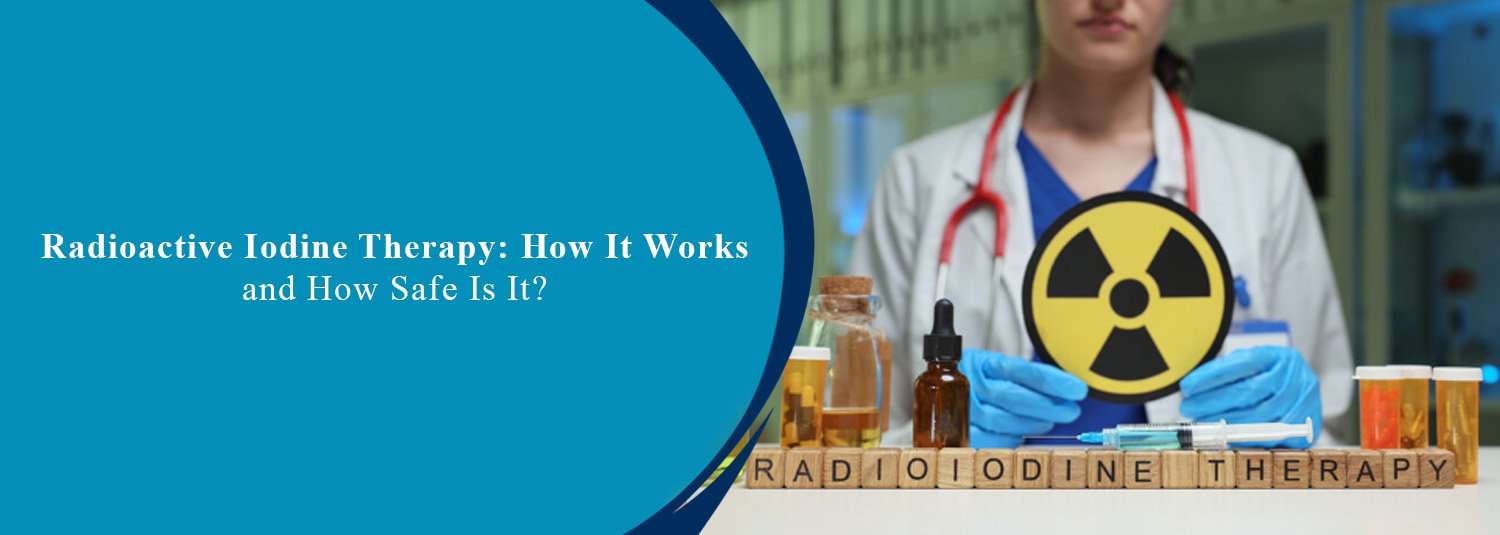
Radioactive iodine therapy (RAI) is a type of treatment for the thyroid that is used in nuclear medicine. It employs radioactive iodine, most frequently iodine-131 (I-131), which gets absorbed by thyroid cells. Radioiodine is naturally absorbed by thyroid cells and can therefore provide thyroid tissue with radiation. It is believed this helps slow and/or eliminate thyroid cells overproducing thyroid hormone or, in selected patients, remaining iodine-avid thyroid cancer cells. The thyroid-related nuclear medicine procedures are carried out under the supervision of Dr. Nikunj Jain, Co-Founder & HOD – Nuclear Medicine, and treatment is planned as per the thyroid disease condition, previous reports, and clinical requirement.
What Is Radioactive Iodine Therapy?
Targeted therapy uses radioactive iodine, which is a radioactive iodine capsule or liquid swallowed by the patient. Iodine is readily absorbed by the thyroid. When I-131 is administered and taken up by thyroid tissue, it emits radiation, which is used to kill thyroid tissue over time. Iodine-123 (I-123) is a diagnostic iodine radionuclide that gives diagnostic information without appreciable damage to thyroid cells. I-131 is generally used for treatment because its radiation can destroy thyroid tissue.
Why Is Radioactive Iodine Therapy Used?
RAI therapy is mainly used for selected cases of:
Hyperthyroidism, including Graves' disease and toxic thyroid nodules
Certain types of thyroid cancer, particularly differentiated thyroid cancers such as papillary and follicular thyroid cancer
Treatment isn't suitable for all thyroid problems. RAI is generally not effective for thyroiditis because the excess hormone results from release of preformed hormone rather than increased iodine uptake/synthesis. The reason for using RAI for thyroid cancer depends on the type and stage of cancer, findings of surgery, and the risk of cancer recurrence and the ability for the cancer cells to absorb iodine.
How Does Radioactive Iodine Therapy Work?
The treatment works because thyroid cells can absorb iodine. I-131 that has been ingested goes into the bloodstream and is absorbed by the thyroid tissue. Then the radioactive iodine emits radiation within the cells. This radiation, over time, injures, erodes, and even kills some of the thyroid's tissue. The aim is to decrease the activity of hyperthyroid thyroid tissue and reduce thyroid hormone levels in hyperthyroidism. After surgery, I-131 can be used to treat any thyroid tissue left or if there are thyroid cancer cells that contain iodine after surgery.
How Is Radioactive Iodine Given?
Radioactive iodine is usually administered orally as a capsule or a liquid. The dose is dependent on the purpose of treatment and the patient's personal clinical condition. This is done to increase TSH and/or reduce iodine exposure so iodine-avid thyroid tissue/cancer cells take up RAI. This includes temporary dose adjustment or cessation of thyroid replacement, or the use of recombinant TSH. In some cases, a low-iodine diet may also be advised. Your nuclear medicine specialist will give you details before you start treatment.
What Happens After Radioactive Iodine Therapy?
Some of the radioiodine is present in the body for a short period and withers away after administration. It is slowly excreted from the body, mainly in urine and saliva. The patient also has a slight amount of radiation for a short (post-treatment) period that requires precautions to prevent radiation exposure. These measures minimize the radiation exposure of other people, coworkers, and family members.
The patient may be told to stay away from people (including children and pregnant women) for a certain time depending on the dose of the medication and the use of it. They may also be taught about sleeping arrangements, travel, hygiene, sharing utensils, etc. The duration depends on the administered dose, indication, and individual circumstances.
Is Radioactive Iodine Therapy Safe?
Radioactive iodine treatment has been used for many decades in patients who are appropriately selected, and is a safe and effective treatment when patients are properly selected. As with any medication, there are some warnings and side effects of its use. The safety of RAI depends upon the dose, purpose of the treatment (whether for hyperthyroidism or thyroid cancer), the patient's age, and medical history (including other conditions the patient has or does not have). Common Side Effects of Radioactive Iodine Therapy
Some patients may experience temporary side effects after treatment. These can include:
Mild neck discomfort or tenderness
Dry mouth
Changes in taste
Sore throat
Dry eyes
Swelling or discomfort of the salivary glands
Salivary gland and tear gland problems are more relevant with higher or repeated doses, particularly in thyroid cancer treatment.
Can Radioactive Iodine Cause Hypothyroidism?
Yes, a common side effect of RAI (hyperthyroidism) is hypothyroidism. As part of the treatment, you have a reduction in the amount of thyroid tissue, so the thyroid gland may eventually not make enough thyroid hormone. Most patients who have hypothyroidism need to take thyroid hormone replacement (levothyroxine). Function of the thyroid is therefore checked following treatment. This change may occur at different times for different patients.
Is Radioactive Iodine Therapy Safe for Everyone?
No, RAI is not warranted in certain situations. RAI is contraindicated during pregnancy and breastfeeding. Radioactive iodine can expose the baby and can harm the baby's immature thyroid gland. Also, it should not be used during breastfeeding. Pregnant patients, patients who plan to become pregnant, or who are breastfeeding should inform their doctors before treatment.
Individuals with thyroid eye disease should also be of special concern, and RAI may worsen thyroid eye disease and treatment choice should be individualized. The doctor who is treating you decides if it's suitable for you to have RAI or if you should consider another treatment. Does Radioactive Iodine Increase Cancer Risk?
The potential long-term risks of radioactive iodine need to be considered, particularly when higher or repeated doses are used. The American Thyroid Association notes that some studies have suggested a slightly increased risk of secondary cancers following RAI treatment, while the overall treatment is considered safe and effective for appropriately selected patients.
Radioactive Iodine Therapy for Thyroid Cancer
RAI may be used after surgery for selected patients with papillary or follicular thyroid cancer. It can destroy remaining normal thyroid tissue and iodine-avid cancer cells that may remain after surgery. However, not every thyroid cancer patient needs radioactive iodine. The decision depends on the cancer's risk features, size, spread, lymph-node involvement, and other clinical factors. RAI is also not effective for every type of thyroid cancer. For example, it is not used to treat medullary thyroid cancer because these cancer cells do not take up iodine in the same way as differentiated thyroid cancer cells.
Radioactive Iodine Therapy at Molecular Diagnostics and Therapy
At Molecular Diagnostics and Therapy, radioactive iodine therapy is provided as part of thyroid-focused nuclear medicine services under the guidance of Dr. Nikunj Jain, Co-Founder and HOD – Nuclear Medicine. Before treatment, the patient's diagnosis, previous thyroid investigations, medication history, and other relevant factors are considered. The appropriate treatment plan and radiation-safety instructions are then provided according to the clinical requirement.
Conclusion
RAI targets iodine-absorbing thyroid tissue or iodine-avid thyroid cancer cells throughout the body. It is used often in properly selected cases of hyperthyroidism and in some cases of differentiated thyroid cancer.RAI is generally considered a safe and effective treatment for appropriately selected patients, but it has potential short- and long-term risks. Contraindications are pregnancy and breastfeeding, with the need for radiation safety measures following treatment.
Another point is that there may be some long-term effects: hypothyroidism and a slight risk of some secondary cancers, especially after higher or repeated doses and radiation exposure from RAI. Dr. Nikunj Jain and the nuclear medicine team at Molecular Diagnostics and Therapy offer thyroid support for evaluations and therapy according to patient-specific needs.