
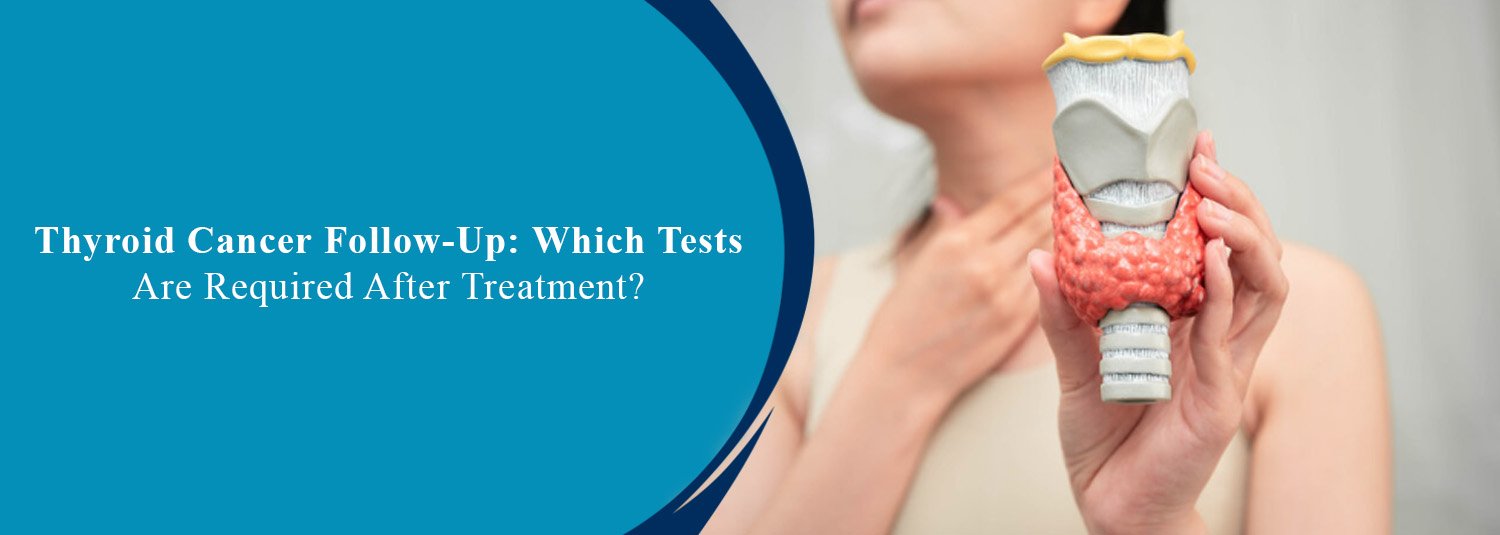
Post-treatment of thyroid cancer is vital, but it is a huge accomplishment to finish treatment, and follow-up care is important to continue as part of a long-term health management plan. Follow-up allows healthcare professionals to assess recovery, as well as track a treatment's effectiveness or whether or not the disease has returned. Tests recommended after treatment vary depending on thyroid cancer type, treatment provided, individual risk factors, and continuing clinical findings. Dr. Nikunj Jain and Molecular Diagnostics and Therapy highlight individual follow-up and suitable follow-up diagnostic evaluation following treatment for thyroid cancer. Why Is Follow-Up Important After Thyroid Cancer Treatment? Follow-up is for monitoring the health of a patient following treatment to check whether the cancer is still controlled. Depending on the type of surgery the patient had, patients may need to be monitored for a long period of time since thyroid cancer can recur several months or years after treatment. Follow-up is not synonymous with the need for all the same tests at each visit. The monitoring schedule is decided based on the type and stage of cancer, treatment, and the pathology report, based on the responses to past treatment.
Thyroid Function Tests Follow-up testing for thyroid function, which may be part of blood tests, can be carried out, especially after surgery performed on the thyroid, or radiation (radioiodine) treatment. Examples of common tests are thyroid-stimulating hormone (TSH) and free T4 (thyroxine). Thyroid tests are used for individuals using thyroid hormone replacement or thyroid medication to determine whether the thyroid's level is normal. Depending on the particular situation, and whether or not thyroid cancer is treated, the desired optimum TSH level could be different. Thyroid medication dosage and testing schedules should be determined by the treating healthcare professional.
Thyroglobulin Testing Thyroglobulin (Tg) is a useful tumor marker to employ for differentiated thyroid cancer in follow-up care for many of the patients who have such cancers. Removal of most (or all) of the thyroid tissue may lead to very low or undetectable thyroglobulin levels for some patients. If it is higher or a new, unexpected level is found, this can sometimes be caused by tissue remaining in the thyroid or recurrent disease, and may warrant additional testing. Thyroglobulin tests must not be used in isolation.
Anti-Thyroglobulin Antibody Testing Measurement of thyroglobulin can be interfered with by anti-thyroglobulin antibodies. Thus, doctors might also test thyroglobulin antibody levels in addition to thyroglobulin. In certain patients, antibody levels at different times in life are a helpful diagnostic tool. The significance of these results may vary and be influenced by the person's treatment experience and other clinical features.
Neck Ultrasound Another important tool in thyroid cancer follow-up is the ultrasound of the neck. It may examine the thyroid bed and surrounding lymph nodes for abnormalities which could warrant additional tests. The frequency and timing of the ultrasound is influenced by patients' risk status and previous results. If a tumour is detected on an ultrasound scan and is not normal, that does not necessarily mean that a person has relapsed with cancer; further evaluation may be required.
Additional Imaging Tests Not all advanced imaging is required for all thyroid cancer survivors. However, if the blood tests, test ultrasound, or symptoms and/or clinical information suggest an additional imaging test may be recommended. Investigations might involve computer tomography (CT) scans, magnetic resonance imaging (MRI), or other scans, depending on the situation. The choice of imaging depends on the patient's clinical situation and the findings being evaluated.
Radioactive Iodine Scans Radioactive iodine is used in treatment of some differentiated thyroid cancer patients. A radioactive iodine scan can be performed as follow-up care in some cases to check for thyroid tissue and/or iodine-avid disease. It is not always recommended based on the type of thyroid cancer and the previous treatment in combination with the risk level and clinical outcome or response. It is not part of a standard assessment for all patients.
Molecular and Genetic Testing A molecular test might be useful for a few thyroid cancer cases. Some genetic or molecular changes can help describe the nature of the tumor and may at times help make an accurate diagnosis, help to determine the risk of the tumor, or help plan treatment. The need for molecular testing depends on the type and nature of the illness. It should be used rather on a clinical basis and not as a routine test for all patients. Molecular Diagnostics and Therapy's laboratory and molecular diagnostic services can help guide medical evaluation of the patient for the appropriate test suitable for the problem.
Physical Examination and Medical Consultation Thyroid cancer follow-up includes diagnostic tests and much more. Routine checkups enable health care providers to talk about symptoms, evaluate the neck, review test results, and review overall health. Patients should let their health care provider know if they have new or ongoing symptoms or changes in health. Follow-up schedules should be individualized and not based on a testing list.
How Often Are Follow-Up Tests Required? Follow-up intervals vary from person to person. Patients may need more frequent follow-up evaluations in the initial few years after treatment, while others at lower risk, with reassuring previous results, may have longer intervals between evaluations. Follow-up plans may also vary from time to time based on tests and treatment responses. Even if someone is feeling good, it is important to continue with the recommended follow-up schedule.
Conclusion Follow-up for thyroid cancer may include measurements of thyroid hormones, testing for thyroglobulin and anti-thyroglobulin antibodies, tests of the thyroid to check if there are any complications, such as using an ultrasound of the neck, and select additional imaging (such as CT or MRI) or molecular (laboratory) tests. Certain tests are not essential for every patient, and results should always be compared with any previous tests, treatment, and the patient's medical history. Comprehensive thyroid cancer care includes the use of appropriate structural, molecular, and laboratory investigations for the follow-up of thyroid cancer, which is supported by Dr. Nikunj Jain and Molecular Diagnostics and Therapy, fostering an individual approach.